
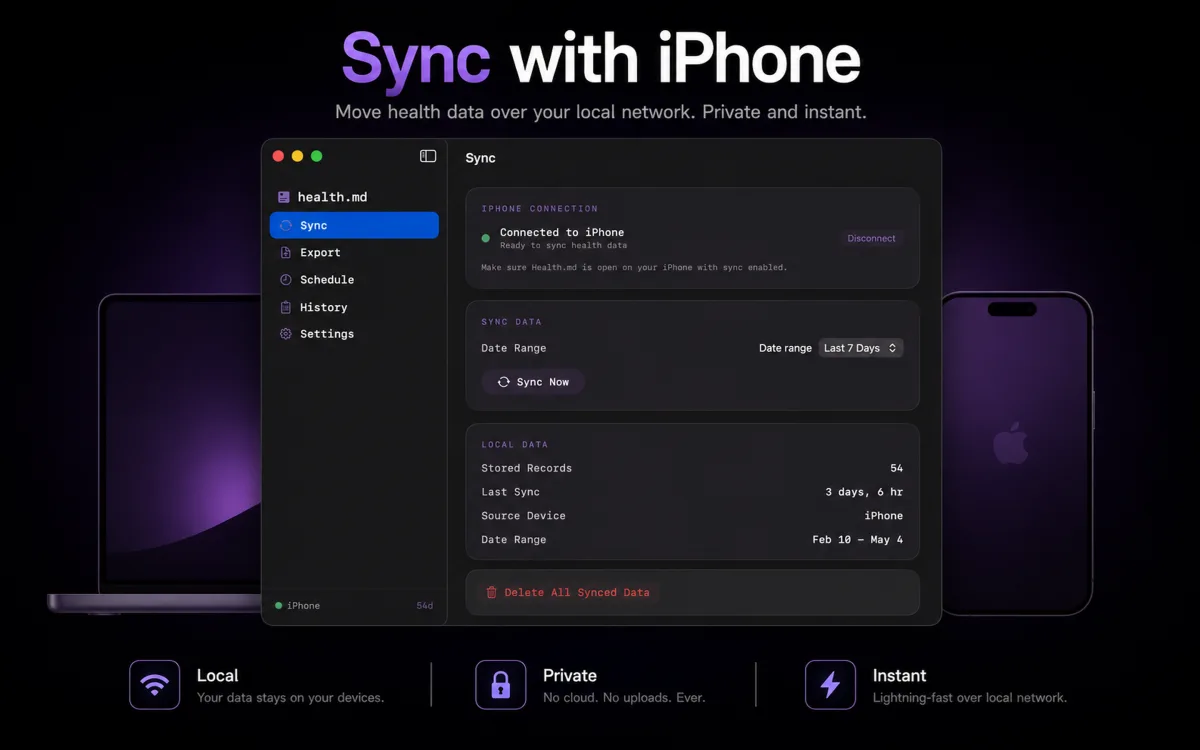
Health.md already lets you export Apple Health data into local Markdown, JSON, CSV, and Obsidian Bases files. The Mac companion extends that workflow by making your Mac the renderer and destination for iPhone-captured export jobs.
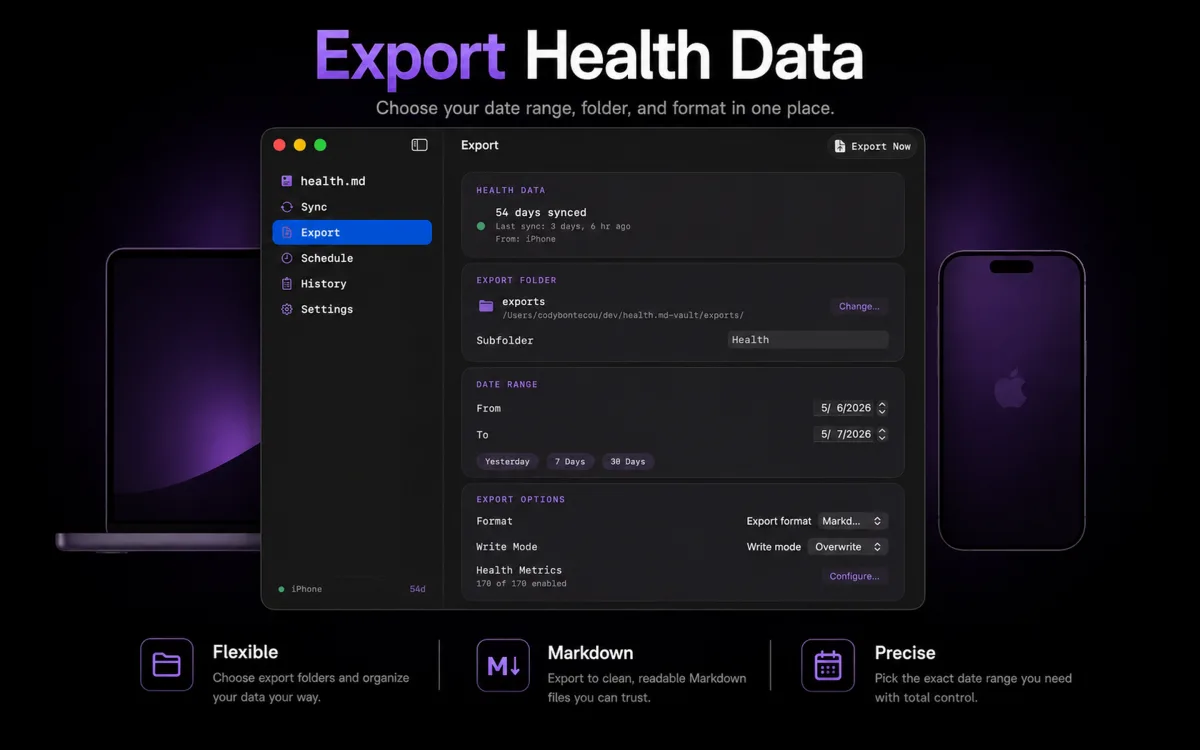
The important detail is that the iPhone remains the HealthKit source. Your iPhone captures the selected Apple Health data and an exact snapshot of the metrics, formats, date range, filename template, folder structure, and write mode. It transfers that versioned job to the Mac, where shared exporters render and write the requested files into the folder you chose.
Why use the Mac destination?
- Your Obsidian vault only lives on your Mac.
- You want exports written directly into a folder that is backed up or versioned on macOS.
- You prefer desktop storage for large backfills and long-term health archives.
- You want a menu bar app that keeps destination readiness visible.
What stays private
No remote account is required for this workflow. The Mac destination is local to your Apple devices and folders. Health data is not uploaded to a Health.md cloud service. The files land where you choose: local disk, iCloud Drive, an Obsidian vault, or another folder available to macOS.
What to read next
The updated docs include a Mac Sync guide, a macOS app guide, and a production-backed Export Reference covering every public schema, metric definition, source-record shape, field, format, and connected protocol.